


You rely on your automated entry system to provide security and convenience every single day. However, it is easy to overlook the fact that electric gate maintenance is a technical necessity rather than a luxury. Industry data show that up to 75% of garage and gate system failures stem from a lack of regular maintenance, while around 30% of repairs result from high-tension components such as springs and moving parts. These numbers highlight a simple truth: most breakdowns are preventable with routine servicing.
Modern electric gates are no longer just basic entry barriers. Much like advanced garage systems, they rely on complex mechanical components, motors, and safety sensors working together. Without proper upkeep, even a small issue, such as misalignment or wear, can escalate into costly repairs or safety risks.
In fact, safety organizations have long emphasized that properly installed and maintained sensor systems can eliminate up to 95% of entrapment-related risks, reinforcing how essential routine checks really are.
In today’s smart home era, electric gates serve as both a security feature and a reflection of property value. A well-maintained system not only ensures smooth operation but also protects your household, enhances curb appeal, and extends the lifespan of your investment. Taking a proactive approach to maintenance is the key to avoiding unexpected failures while keeping your property safe and efficient.
Understanding the fundamental mechanics of your gate is the first step toward long-term reliability and peace of mind.
Why Routine Maintenance is Your Best "Insurance Policy"?
The biggest reason to care for your gate is to prevent a small "hiccup" from becoming a total breakdown. Every time your gate opens, the motor, the chains, and the hinges work together. Without a little help, friction builds up. This forces the motor to work much harder and run hotter, which eventually leads to a burnt-out system. Proactive electric gate maintenance ensures these parts move freely, saving you from a costly motor replacement.
Safety is the second big reason. Modern gates have "eyes" (sensors) that tell them to stop if a car, pet, or person is in the way. Over time, these sensors can get dirty or knocked out of place. If the gate can't "see" an obstacle, it becomes a major safety risk. Regular testing ensures these safety features are always ready to protect your family or your customers.
Finally, a noisy or rusty gate just looks bad. It tells visitors that the property might not be well-cared for. On the other hand, a silent, smooth gate shows you take pride in your space. Once you see that maintenance is really about saving money and staying safe, the next step is following a simple routine.
Your Easy-to-Follow Gate Maintenance Checklist
You don’t need to be a mechanic to follow a solid gate maintenance checklist. Your first task is the simplest: keep the area clean. For sliding gates, even a small rock or a pile of wet leaves in the track can cause the motor to struggle or stop. Use a stiff brush or a leaf blower once a month to keep the path clear. For swing gates, make sure there is no tall grass or dirt piles blocking the gate's path.
Next, you’ll want to do a "Listen and Look" test. Open the gate and listen for any grinding or screeching. Visually check the hinges for signs of rust or cracks. If you catch rust early, you can sand it and paint it before it eats through the metal. These small checks prevent a minor issue from turning into a massive gate operator repair project later on.
The final DIY step is checking for "uninvited guests." Bugs and spiders love the warmth of the electric control box. Their nests can actually short out the electronics. Every few months, check the box and gently clear out any webs. This simple habit keeps the "brain" of your gate working perfectly.
| Maintenance Task | How Often? | Why it Matters |
| Clear Track & Debris | Monthly | Stops the motor from straining |
| Visual Rust Check | Every 3 Months | Stops the gate from falling apart |
| Grease Moving Parts | Every 6 Months | Keeps everything quiet and smooth |
| Test Safety Sensors | Every 6 Months | Ensures the gate stops for people/cars |
| Professional Tune-Up | Annually | Calibrates the whole system |
Keeping the outside tidy is great, but the motor needs its own special attention.
The Secret to Simple Gate Motor Maintenance
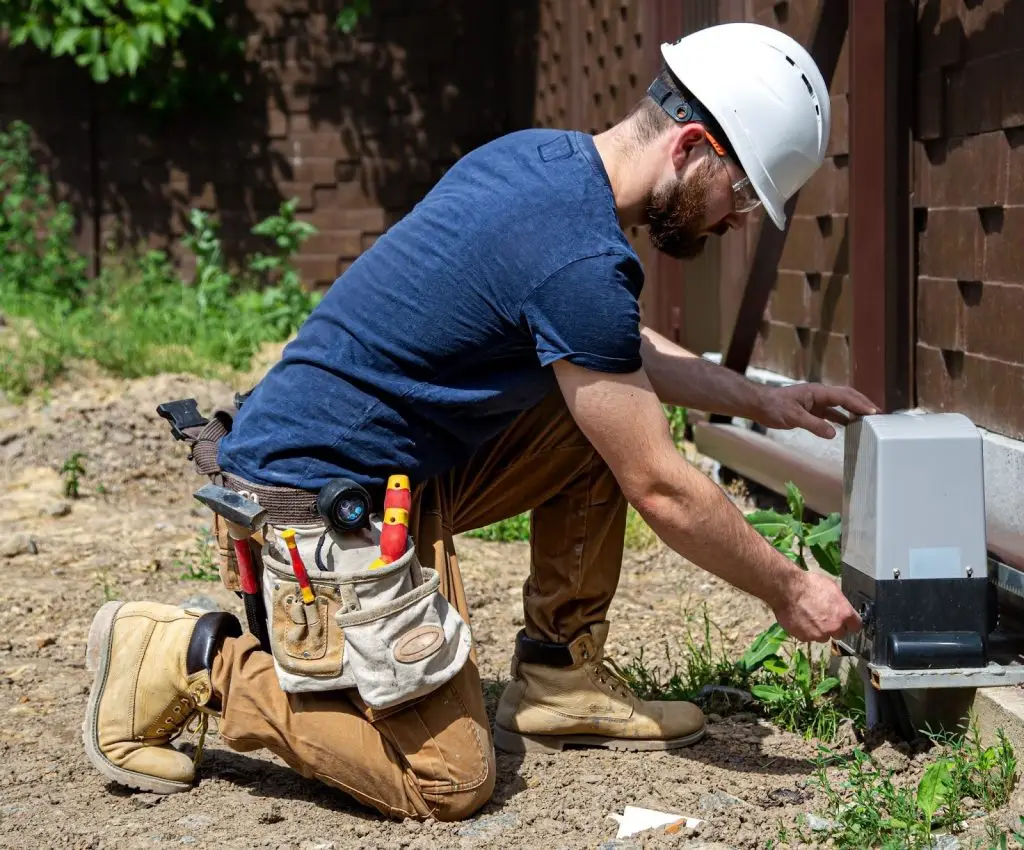
The motor is the heart of your system, and keeping it healthy is the best way to avoid a total breakdown. Since this component does the heavy lifting, it requires careful attention to stay quiet and powerful. Here is how you can manage your gate motor maintenance in three straightforward steps:
- Apply Smart Lubrication
The best thing you can do for your motor is keep it moving freely. However, you should never use heavy grease or WD-40, as these attract dirt and turn into "sandpaper" that wears down the gears. Instead, use a high-quality silicone or white lithium spray. Apply it directly to the drive chain and the motor's visible moving parts to keep everything sliding easily.
- Test the Backup Battery
Most electric gates have a battery that takes over when the power goes out. These batteries generally only last 3 to 4 years before they lose their charge. Testing yours is easy: turn off the main power at the breaker and see if the gate can still open and close a few times. If it moves very slowly or doesn't move at all, it’s time to swap in a new battery.
- Adjust the "Stopping Points" (Limits)
Your motor uses "limits" to know exactly when to stop moving. If your gate is slamming into the post or stopping halfway open, these settings have likely drifted due to the vibration of daily use. Adjusting them is usually as simple as turning a screw on the operator. Keeping these set correctly ensures your motor isn't trying to push against a gate that is already closed, which is a leading cause of broken internal gears.
When to Call for Professional Electric Gate Repair

As much as we love a DIY fix, some things need an expert. If your gate is "shaking" as it moves, or if it feels very heavy when you try to move it by hand, you likely have a broken internal part. Trying to do a DIY electric gate repair on a high-pressure arm or a heavy spring can be dangerous. A pro has the right tools to fix these safely without making the problem worse.
Electrical issues are another "pro-only" zone. If your gate is blowing fuses or your remote only works when you're standing right next to it, you might have a short circuit. Tracing these issues requires special tools and knowledge. Trying to "guess" your way through a motherboard repair usually ends with a puff of smoke and a much higher bill. Let a technician find the root cause to ensure the fix lasts.
You should also call for help if a car has bumped the gate. Even if there’s no big dent, the impact can knock the hinges out of line. When a gate is crooked, the motor has to fight gravity to move it, which will burn it out very fast. A technician can realign the gate so it moves with almost no effort. Catching these "hidden" issues is the key to a long-lasting gate.
The Big Question: Repair or Replace?
Sometimes, no matter how much gate maintenance you do, the system just gets too old. If your motor is over 15 years old and you keep having to call for repairs, you might be wasting money. Newer gate systems are much quieter, use less electricity, and are much safer. They also offer better security features that are harder for intruders to hack.
If your actual gate is still in good shape, you don't always have to replace everything. You can often just swap the old motor for a new one. This is a cost-effective way to get a brand-new warranty and modern features without the price of a full new gate installation. It’s a smart way to keep your property secure while staying on a budget.
When deciding, consider how often you use the gate. If your family has grown or your business has more customers, you might need a stronger motor than the one you started with. Making the right choice now ensures you won't have to worry about your gate for another decade.
Keep Your Gate Reliable Year-Round
Staying consistent with electric gate maintenance is one of the smartest ways to protect your property and avoid unexpected disruptions. Most gate problems don’t appear suddenly - they develop over time due to wear, weather exposure, and lack of routine care. By following a simple maintenance routine and watching for early warning signs, you can keep your system running smoothly for years.
A well-maintained gate not only improves safety but also prevents costly repairs and unnecessary stress. If your gate hasn’t been checked recently, now is the perfect time to take action. The experienced team at Novak Doors & Gates can inspect your system, identify potential issues, and provide reliable solutions tailored to your needs.
Don't let a small delay bring you a bigger problem tomorrow. Contact Novak Doors & Gates to schedule your assessment today.
Frequently Asked Questions
What is electric gate maintenance?
Electric gate maintenance is a complete check-up for your entrance. It involves inspecting the hardware, cleaning the tracks, greasing moving parts, and testing the electronics to ensure the gate opens and closes safely every time.
How often should I maintain my electric gates?
Most electric gates need a professional service once a year. However, if you use your gate frequently or live in an area with harsh weather, you should follow your gate maintenance checklist every 6 months.
Can I handle gate motor maintenance myself?
You can easily handle tasks like clearing debris and surface cleaning. However, technical gate motor maintenance, such as adjusting the control board or fixing internal wiring, should be left to the pros to avoid safety risks.
What should be included in a gate maintenance checklist?
A solid gate maintenance checklist should include clearing the tracks, checking for rust, greasing the hinges and chains, testing the safety sensors, and ensuring the backup battery is still holding a charge.
When should I call for electric gate repair?
You should seek electric gate repair if you see sparks, hear loud mechanical thumping, or if the gate refuses to move at all. If the safety sensors fail to stop the gate, call a technician immediately for help.
Why is my gate making unusual noises?
Loud noises usually mean a part is rubbing or lacks grease. If you ignore these sounds, the extra friction will eventually break the motor. Catching it early with a gate operator's repair is much cheaper than a full replacement.
Who should I trust for electric gate maintenance services?
For reliable care and expert electric gate repair, it is best to work with professionals like Novak Doors & Gates. Our team understands exactly how to keep your mechanical and electrical systems working in perfect harmony.


